


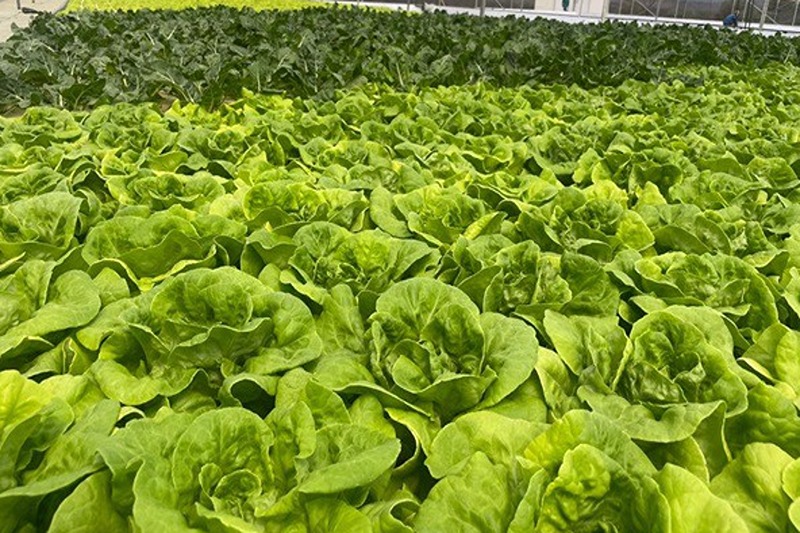
What began as a quest to master commercial-scale aquaponics has evolved into a blueprint for regional expansion for The Oribi Aquaponics Group. After navigating a steep learning curve, the company is now doubling its production capacity and setting its sights on supplying markets across Southern Africa.
“It would be an understatement to say we had big lessons to learn,” reflects Ryno Postma, Commercial Director of Oribi Aquaponics. The initial phase of their operation was marked by inconsistent production—a challenge that highlighted the critical differences between a hobbyist setup and a commercial enterprise.
The key breakthrough came from a comprehensive system review. “We discovered that minor, consistent water changes have a substantial impact on plant health and growth rates,” Postma explains. This attention to detail allowed them to fine-tune their closed-loop system, moving from unpredictable yields to complete production control.
Currently operating a 2,500 m² aquaponic system within a 5,000 m² greenhouse, Oribi is in the final stages of a major expansion. The project will fully utilize the greenhouse, doubling their aquaponic growing space to 5,000 m².
The expansion is part of a broader diversification strategy. “We are not just scaling what we have,” says Postma.
“We are setting up a dedicated seedling house, a net house for soil-based crops, and significantly expanding our packhouse to handle the increased volume.”
This infrastructure investment supports the production of 20 to 25 vegetable lines, including eleven distinct lettuce varieties and notably successful celery crops.
Oribi’s growth aligns perfectly with the Namibian government’s import substitution goals. By producing high-value, perishable greens locally, they have dramatically altered the supply chain and cost structure for retailers.
“We’ve brought down the price of premium pillow-pack lettuce in Namibian stores by 30 percent to 50 percent,” Postma states.
“This product no longer has to travel 1,600 kilometres from Johannesburg, which reduces spoilage and cost.”
Their success is also shifting consumer habits. While unwashed Iceberg was historically the norm, Namibian shoppers are increasingly embracing the diverse, high-quality lettuces grown by Oribi. The company is a key supplier to major retailers like Food Lovers, Spar, and South Africa’s Freshmark (Checkers).
The impact is particularly evident with celery. “Since ramping up our production, Namibia’s reliance on celery imports has dropped sharply,” notes Postma.
This success has opened their eyes to regional opportunities. “Zambia, for instance, imports four times as much celery as Namibia from twice as far. There’s a clear opportunity to supply these markets directly from a neighbouring country.”
For fellow growers considering or operating aquaponics systems, Postma emphasizes moving beyond common misconceptions.
“The biggest fallacy is expecting the fish to take care of everything,” he says. “This will surely lead to failure in one of the many variables where something can go wrong.” At Oribi, they have built a custom production tracker to monitor every aspect of the system, ensuring they can harvest eleven lettuce crops annually with consistency.
Even with a healthy tilapia stock, supplementation is non-negotiable. “Our biggest learning curve is understanding that the fish don’t supply every micronutrient the plants need,” Postma explains.
“There will always be a level of supplementation required for optimal plant health.”
Farming in Namibia’s arid climate adds another layer of complexity, primarily concerning water quality and nutrient salt buildup. “Like in hydroponics, this needs to be managed closely, sometimes by flushing the system, but we have to do it carefully within our circular model,” he adds.
With strengthened systems and expanding capacity, Oribi Aquaponics is poised to become one of the largest operational aquaponics farms in Africa. But for Postma, scale is just one metric.
“It sounds impressive to say you’re one of the biggest,” he concludes, “but what is truly impressive is supplying a high-quality product, creating jobs, satisfying your clients, and helping to grow the entire market. That’s the model we’re building on.”