


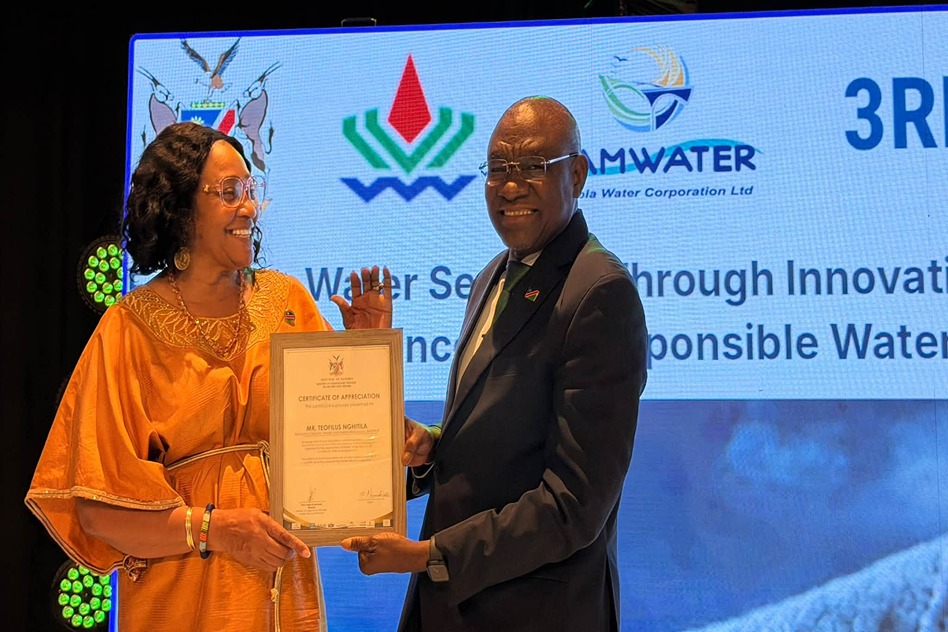
Turning political commitment into prepared projects, finance and reliable services emerged as a central priority at the 3rd Namibia Regional Water Symposium in Swakopmund, held from 10 to 13 November 2026. For the Global Water Partnership Organisation (GWPO), the discussions connected Namibia’s water investment needs with a wider chance to speed up delivery ahead of the UN Water Conference. The symposium brought together government, water professionals, researchers, industry and young innovators around the practical challenges of water security, with a shared message that investment must support dependable services, climate resilience and economic development, with clear responsibility for implementation.
Prime Minister Elijah Ngurare put people’s daily lives at the centre of the ambition, pointing to a rural household with dependable water, a school with safe sanitation, a farmer better prepared for drought and “a business able to invest with confidence.” He stressed sound project preparation, transparent procurement and effective implementation, with investment judged by functioning infrastructure and dependable services. Agriculture, Fisheries, Water and Land Reform Minister Inge Zaamwani called for the discussions to become focused actions with responsible institutions, realistic timelines, financing needs and measures of success. Water security, she said, underpins food production, employment and inclusive development and needs steady investment, capable institutions and public trust, with priorities that include reaching underserved communities, improving sanitation, reducing water losses and strengthening drought preparedness alongside reliable services and maintenance.
South Africa’s Minister of Water and Sanitation, Pemmy Majodina, linked national challenges to the international financing agenda and the need for partnerships between government and the private sector. She said, at the UN Water Conference in Abu Dhabi in December 2026, South Africa will co-chair the Investments for Water dialogue with France, which will seek to mobilise finance and partnerships to close the water investment gap. GWPO is a partner to that dialogue, offering a route to bring country priorities into the global conversation.
GWPO sees a chance to bring Namibia’s water priorities together in a National Water Investment Programme that links projects at different stages of preparation with the technical support and finance they need. Chief Executive Alex Simalabwi outlined opportunities across water supply, storage, desalination, reuse and transboundary cooperation and urged a coordinated portfolio approach joining national priorities with project preparation and financial structuring. A proposed global de-risking facility, he said, would speed up technical assistance and help projects reach financial close, building on National Water Investment Programmes under the Continental Africa Water Investment Programme. GWPO’s Global Director of Programme Development and Delivery, James Dalton stressed that governance, finance and knowledge are interdependent foundations, which means bringing the people who manage water into the same conversation as those who set budgets, plan infrastructure and make investment decisions. With its primary headquarters in Windhoek and its finance and investment hub in Cape Town, GWPO can connect country priorities with expertise in project preparation, financing and water governance.
The symposium also made room for young people as innovators and partners. Through the Next Generation Water Innovators programme, university students were invited to apply their knowledge to real water challenges in Namibia. Gergana Majercakova, GWPO’s Global Head of Innovation, Knowledge and Capacity Development, encouraged government, researchers, water professionals and private partners to help promising ideas move beyond presentations through mentorship, technical support, partnerships and real world testing, linking youth involvement directly to delivery.