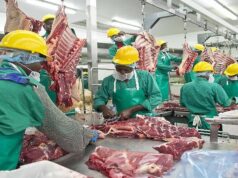


Namibia’s drive toward food self-sufficiency has reached a new milestone, with the domestic poultry sector processing a staggering 17.6 million chickens for local consumption by the end of November 2025.
This performance, detailed in the latest statistics from the Livestock and Livestock Products Board of Namibia (LLPBN), highlights a maturing industry that is rapidly scaling to meet the protein demands of a growing population.
Despite the surge in domestic slaughtering capacity, the industry remains intricately linked to regional supply chains. Data reveals that Namibia imported 419,761 live chickens during the first eleven months of 2025, with the vast majority being day-old chicks sourced from South Africa. This reliance on cross-border genetics highlights a strategic bottleneck; while Namibia has mastered the mid-to-downstream processing of poultry, it still heavily relies on South African hatcheries to replenish its commercial flocks.
The market remains highly consolidated, with production throughput currently dominated by two primary players: Namibia Poultry Industry (NPI) and the emerging Kadila Poultry. Industry analysts suggest that this duopoly has provided the necessary scale to stabilise local supply; however, it also reflects the high barriers to entry for smaller commercial competitors. In November 2025 alone, the country absorbed 43,600 live chicken imports to sustain this momentum, ensuring that the holiday season demand was met without significant price volatility.
“Namibia is making significant strides toward self-sufficiency in poultry production, reducing reliance on imports,” noted Immanuel Kadhila, Managing Director of Eos Capital, which holds a strategic investment in Kadila Poultry. He further emphasised the importance of safeguarding these gains, stating, “A strong, locally driven poultry industry ensures resilience, safeguards jobs, and strengthens economic sustainability.”
The record-breaking slaughter figures are a sharp contrast to other livestock segments, which have faced headwinds from regional drought conditions. By focusing on intensive, climate-controlled broiler production, the poultry sector has managed to decouple its growth from the immediate impacts of erratic rainfall that often plagues traditional cattle and sheep farming. However, the sector’s next hurdle will be the localisation of the “upstream” segments, specifically breeding and grain-feed production, to fully insulate the N$2.1 billion industry from external shocks.