

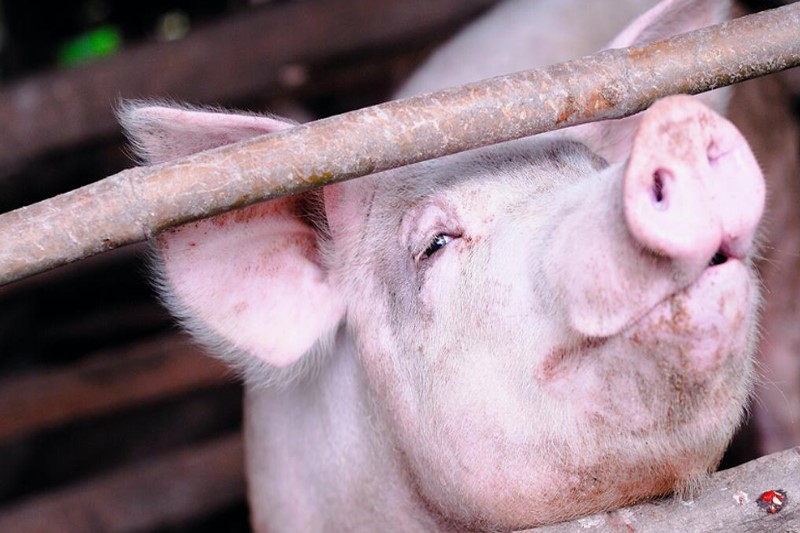
For pig producers operating on tight margins, profitability can be won or lost long before animals reach market weight, with feed efficiency emerging as a critical lever for controlling production costs and improving the competitiveness of Namibia’s growing pig industry.
The message was delivered at an information session hosted by the Pig Producers Association of Namibia in Windhoek, where Lionel’s Group of Companies Chief Executive and Pig Farming Specialist Duncan Stephenson urged producers to measure feed performance more closely and align nutrition with each stage of growth. Stephenson said the objective should be to determine precisely what each kilogram of weight gain costs and use that information to optimise feeding decisions. He noted, “Number one is we want to grow cost per kg as efficiently as possible.”
Producers, it requires moving beyond simply monitoring the quantity of feed consumed to understanding how effectively it is converted into animal growth. Feed represents one of the most significant costs in intensive livestock production, making small improvements in feed utilisation capable of having a direct impact on farm profitability. Stephenson said pigs should receive diets tailored to their specific developmental stage, with nutritional requirements changing significantly from piglet through to finishing.
Piglets require higher levels of vitamins to support organ development, while growers need diets formulated to promote muscle development. As animals approach finishing, their energy requirements change as growth rates slow, requiring adjustments to prevent excessive fat accumulation. The same principle applies to breeding stock. Stephenson said sows need carefully managed nutrition to support development and reproductive performance without becoming excessively fat. “A sow needs to develop. We can’t let it be too fat. She won’t produce milk,” said Stephenson.
The emphasis on precision feeding comes as Namibia’s pig sector expands and producers face pressure to improve productivity while managing input costs. Better measurement of feed conversion can give farmers a clearer basis for deciding where changes in nutrition, animal management or production practices can improve returns. The industry is also facing a knowledge gap, with producers requiring greater access to specialised information and practical training. Business developer for pigs and poultry Warnich Biersteker said there remains a shortage of knowledge within the sector and encouraged producers to make greater use of information sessions and online training opportunities. “There is definitely a gap in the market and there’s a lack of knowledge,” said Biersteker.
He also encouraged farmers to explore artificial intelligence as an additional information resource, while cautioning producers to assess the quality and reliability of information before applying it to their operations. For a sector becoming increasingly commercialised, the need for specialised knowledge extends beyond nutrition. Production performance is also closely linked to animal health, biosecurity and vaccination. Pig producer Rango Haikali said the pig industry is growing relative to some other livestock sectors, increasing the importance of sound animal-health practices as production expands.
He urged farmers to follow appropriate vaccination protocols and maintain strong biosecurity measures to protect herds and reduce production risks. While Namibia has veterinarians, state veterinary services and agricultural extension officers, Haikali noted that relatively few professionals specialise specifically in pigs. He said, “Very few are specialising in pigs.” That shortage of specialised expertise presents an additional challenge for an industry seeking to build scale and improve productivity. As more farmers enter or expand within pig production, access to specialist veterinary, nutritional and production knowledge will become increasingly important.
Pig producers’ path to stronger margins therefore runs through more than increasing herd numbers. Improving how efficiently every kilogram of feed is converted into saleable weight, supported by better animal health and specialised knowledge, could become one of the sector’s most important competitive advantages.