



The Etunda Irrigation Project in Namibia’s Omusati Region is reaping the rewards of steady investment and careful planning, with an impressive mango harvest making headlines this week. From its expansive 60-hectare orchard, the project has produced roughly 60 tons of fruit an achievement that speaks volumes about its rising influence within the country’s agricultural sector. Outstanding progress indeed. The milestone drew the attention of Minister of Information and Communication Technology, Emma Theofelus, who conducted a strategic visit to assess both productivity and operations on the ground. During her tour, the Minister noted that the mangoes are already undergoing grading and packaging for local distribution, a process that feeds directly into regional markets and supports traders who ensure the fruit reaches nearby communities. One can almost feel the momentum building as the project strengthens its role in sustaining local livelihoods.
The sharp rise in mango production has pushed government planners to think beyond the orchard and toward the factory floor. Minister Theofelus revealed that the surplus now on hand opens a realistic door to establishing a local fruit juice processing plant an idea that could dramatically elevate the project’s economic footprint. A forward-thinking move, no doubt. This diversification effort is being carefully examined through a technical partnership with the University of Namibia, ensuring that innovation is guided by research rather than guesswork. By shifting focus from selling raw fruit to producing value-added goods, the scheme hopes to secure a stronger market position while shielding farmers from the unpredictable price swings that so often plague fresh produce sales.
Yet, even as the project celebrates promising harvest numbers, underlying challenges threaten to cast a long shadow over its future. Minister Theofelus voiced deep concern over increasing cases of vandalism and theft, issues that are steadily eroding both day-to-day operations and the project’s financial footing. “That is very disheartening because as a community vandalises or steals the produce at the scheme, it impacts the success of the scheme, and we don’t want that,” the Minister remarked. The consequences extend far beyond lost fruit jobs are placed at risk, confidence in the project falters, and the broader ambition of strengthening regional food production is slowed, if not stalled altogether.
In response to these growing concerns, the Ministry intends to lead a series of targeted engagements with local leaders and residents, aiming to rebuild trust and nurture a shared sense of responsibility for the project’s infrastructure. The Minister stressed that the scheme’s future hinges on whether the community chooses to safeguard it as a national asset rather than view it as a distant government venture. “A lot of conversations need to be held with the community leadership and the community members themselves so they value what is in their community and add value to it so it contributes to the country’s development,” she stated, noting that lasting success in agriculture depends not only on technical skill but also on social commitment without community buy-in, even the most promising projects can struggle to take root.
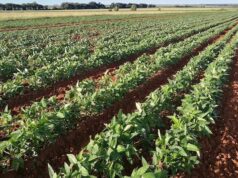
The Etunda Irrigation Project continues to stand as a pillar of Namibia’s agrarian reform efforts, steadily broadening its impact by bringing new farmers onto available plots to ensure every hectare is put to meaningful use. A commendable strategy, to say the least. Beyond mangoes, the scheme boasts an impressively diverse production basket, yielding grapes, naartjies, and essential vegetables including carrots, onions, tomatoes, and cabbage. Always looking ahead, project managers have even begun trial banana cultivation as a way to test new market possibilities and future demand. This layered, forward-looking approach fuels a strong employment pipeline, offering seasonal work to as many as 450 Namibians each year. One can only imagine the ripple effect this has across households in the Omusati Region, where the project continues to serve as a crucial socio-economic anchor.
Looking to the future, the government is positioning the Etunda Irrigation Project as a central thread in Namibia’s broader development story. Minister Theofelus reiterated that safeguarding the nation’s “food basket” is not merely an agricultural concern, but a foundation upon which economic progress is built. A truth that resonates far beyond the fields. “Agriculture is a very valuable aspect of governing this country because once we have our food basket properly maintained, we can develop from there,” she said. In the months ahead, her office will work closely with the Ministry of Agriculture to raise the project’s national profile, ensuring its role in food security and employment creation is both acknowledged and protected. Ultimately, Etunda stands as more than a farming scheme it is a shared national investment, one whose success depends on collective commitment and careful stewardship.