


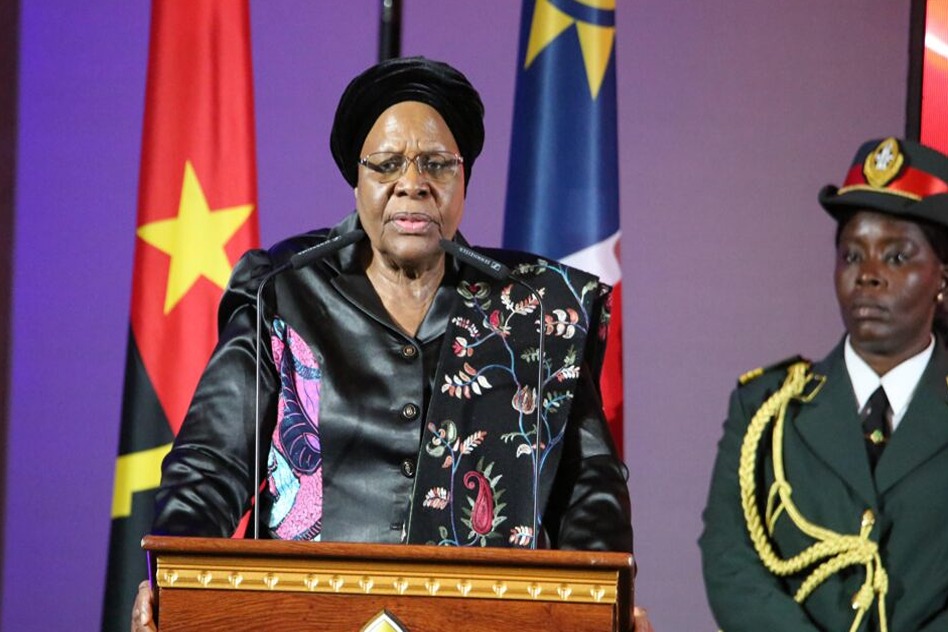
Namibia wants its shared history with Angola to start paying economic dividends. Addressing Angola’s National Assembly, President Netumbo Nandi-Ndaitwah urged lawmakers to turn the bond forged in the liberation struggle into jobs, trade and dependable public services. The vehicle, she argued, is the Angola Namibia Bi National Commission, chaired jointly by the two Heads of State, which gives the partnership the political direction and accountability to deliver results.
The address followed Angola’s 50th anniversary of independence in 2025, a year in which the country also chaired the African Union. Nandi-Ndaitwah praised President Lourenço for his leadership of the bloc and for his role as the AU champion on peace and mediation, noting that “Peace is a prerequisite for development, and national parliamentarians have a role to play in the maintenance of peace and stability.” The president grounded her message in history. “The history of Angola and Namibia is not simply a history of neighbouring countries. It is a history written through sacrifice, courage and an unwavering belief that the freedom of one African nation cannot be completed while another remains oppressed.”
In addition, Nandi-Ndaitwah recalled that Angola’s Founding President, António Agostinho Neto, declared at independence in 1975, “In Namibia, in Zimbabwe and in South Africa lies the continuation of our struggle.” Angola honoured that commitment at enormous cost, she said, opening its doors to the SWAPO Party and to thousands of Namibians in exile and providing refuge, education, medical care and a base from which the liberation struggle could continue, all while facing grave threats to its own peace and development.
The President paid tribute to those who lost their lives on Angolan soil, in particular the victims of the Cassinga massacre of 4 May 1978. She said she looks forward to the joint inauguration of the Cassinga Memorial Park, so that future generations understand both the price of freedom and the duty to preserve it. Namibia’s freedom, she added, was secured through the sacrifices of Namibians, Angolans and Cubans, and she thanked Angola for standing with Namibia when it lost President Hage Geingob in February 2024 and Founding Father Sam Nujoma in February 2025.
That shared past, she argued, carries an obligation. “Our shared past places a responsibility upon us. We must honour the generation that fought for political freedom by securing economic opportunity for the generations that follow,” said Nandi-Ndaitwah. The vehicle for delivering on it is the Angola Namibia Bi National Commission, which she described as an important milestone because it elevates cooperation to a mechanism chaired jointly by the two Heads of State, allowing them to monitor implementation closely. The arrangement brings political, economic, social, defence and security cooperation into a more coherent framework. She noted, “Above all, it demands results.”
The two countries have concluded more than 60 bilateral agreements and memoranda of understanding over the years and signed seven more during this commission. The instruments cover law enforcement, border management, trade, infrastructure development, water and energy security, transport connectivity, education and health, among other sectors. The president was explicit about how success will be judged. “The success of those instruments cannot be measured by the number of instruments signed. It must be measured by the positive changes they make in the lives of our people such as reliable services, greater trade, productive investment and decent jobs,” said Nandi-Ndaitwah.
She placed lawmakers at the centre of that effort, noting that parliaments enact laws, appropriate resources and hold the Executive accountable. The rural mother who needs clean water, the young graduate seeking employment and the trader waiting to cross a border, she said, all stand to benefit from decisions taken in Parliament. Legislatures can deepen cooperation on child protection, the prevention of trafficking in persons, shared water resources and the legal certainty that trade and investment require, and can use oversight to ensure that commitments made through the commission receive the resources and attention needed for delivery. She invoked Amílcar Cabral, who reminded Africans that people struggle for the material conditions that allow them to live better, in peace and to secure the future of their children.
Moreover, Nandi-Ndaitwah recalled the November 2025 working visit to Namibia by Angola’s Standing Committee on Foreign Relations, International Cooperation and Angolan Communities Abroad, led by Felino Job and encouraged regular reciprocal exchanges, including through the SADC Parliamentary Forum headquartered in Windhoek. She also welcomed cooperation between universities and institutions of higher learning, with student exchanges, research and collaboration in water, energy, agriculture, engineering and languages intended to equip young people to build the economies of tomorrow. She closed on the regional dimension, welcoming Angola’s decision to join the SADC Free Trade Area and the finalisation of its tariff offer with member states in February 2025. The bilateral partnership, she said, forms part of a wider regional responsibility.