

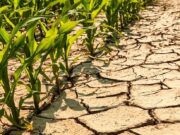


Namibia is moving drought higher up its economic agenda, calling for a fundamental shift from crisis response towards investment in resilience as recurring dry conditions place mounting pressure on agriculture, livelihoods and economic growth.
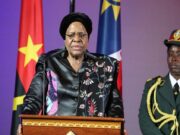
The Minister of Environment, Forestry and Tourism Indileni Daniel said drought risk must be incorporated into long-term economic planning, with governments, development partners and the private sector investing in systems capable of limiting losses before climate shocks escalate into economic crises. “Drought must no longer be managed merely as an emergency. It must be managed as a development, economic and resilience priority,” said Daniel, at the UNCCD COP17 High-Level Segment on Drought and Water Day.
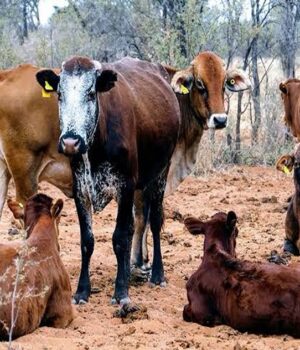
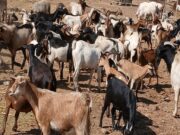
The exposure is significant More than one million people can face food insecurity during severe drought periods, while about 85% of Namibia’s land is pastoral, leaving livestock producers and rural communities particularly vulnerable to prolonged dry conditions. The economic consequences extend well beyond food security. Drought can reduce agricultural output, erode livestock and household assets, weaken rural incomes and increase pressure on government finances as resources are redirected towards emergency relief and recovery.
In Namibia, the challenge is therefore increasingly one of protecting productive capacity. Daniel said investment in drought-resilient infrastructure, water security, early warning systems and financial protection is needed to reduce the economic losses associated with repeated climate shocks. She noted, “Our experience has taught us an important lesson, that we cannot continue responding to drought only after disaster has struck. We must invest before the crisis,” she said.
Namibia is already strengthening early warning systems, contingency planning, sustainable land management and water security measures, while pursuing land restoration through initiatives including the Great Green Wall Initiative. The government is also pushing for more predictable climate finance and innovative risk-financing instruments that can help countries absorb drought-related shocks without repeatedly bearing the full cost through emergency interventions.
The private sector is expected to play a larger role in this transition. Mobilising commercial capital alongside government and development finance could accelerate investment in water infrastructure, resilient agricultural systems, land restoration and technologies that improve producers’ ability to withstand climatic volatility. For the agricultural economy, such investment is ultimately about protecting assets and maintaining productivity. In a predominantly pastoral landscape, safeguarding rangelands and water availability can help preserve livestock production, rural incomes and the economic activity that depends on them.
Daniel also called for stronger coordination across institutions responsible for drought resilience, warning that fragmented approaches risk weakening the effectiveness of national preparedness efforts. She added, “Drought does not respect institutional boundaries and working in silos will not build the resilience we need, only coordinated and collective action can deliver lasting solutions.” The shift being advocated by Namibia is therefore as much financial as environmental. Instead of measuring drought management by the speed of emergency response, the focus is increasingly on how much economic damage can be prevented through investment ahead of the crisis.
In conclusion, Daniel urged COP17 to translate commitments into investment, positioning drought preparedness as an economic safeguard rather than a recurring relief expenditure. The case for acting early is becoming harder to ignore for Namibia. Investing in water security, resilient agriculture, early warning systems and financial protection may require significant capital upfront, but the alternative is continuing to absorb the considerably higher economic costs of lost production, damaged livelihoods and repeated recovery efforts. As drought becomes more frequent and economically disruptive, resilience is increasingly moving from the margins of climate policy to the centre of Namibia’s growth strategy.