



Namibia’s state-backed Etunda Green Scheme is projected to harvest approximately 3,728 tonnes of maize this season, a vital boost for one of Southern Africa’s most climate-vulnerable nations as it fights to curb food imports and insulate consumers from global commodity shocks.
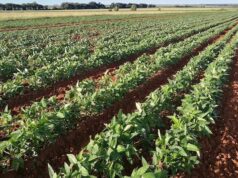
The harvest, sprawling across 466 hectares of irrigated farmland in the northern Omusati Region, is yielding an average of eight tonnes per hectare. Operating under a public-private model designed to blend commercial efficiency with smallholder equity, the project highlights how aggressive infrastructure investment can stabilize food supply chains in regions increasingly starved of reliable rainfall.
“Production is being realised through a combination of commercial farming operations and smallholder participation,” said Sacky Shylomunhu, the scheme’s manager. He noted that the initiative remains a cornerstone of the country’s broader strategy to expand agricultural productivity through state-supported irrigation systems and targeted farmer support.
While agriculture commands a modest share of Namibia’s gross domestic product, it represents the primary economic lifeblood for rural employment and household income. Severe, recurring droughts and acute water scarcity have historically constrained the desert nation’s output, forcing a structural reliance on foreign grain imports.
To counteract these vulnerabilities, the Etunda model functions as both a farm and an incubator, providing 65 small-scale farmers and several medium-scale operators with access to land, advanced irrigation, and technical inputs that would otherwise be cost-prohibitive. Though white maize remains the strategic anchor of the project, growers are increasingly diversifying into high-value cash crops including potatoes, onions, tomatoes, and groundnuts to tap into local market demand.
The strategic value of the yield extends well beyond domestic tables. Part of the current harvest is routed through on-site milling facilities for immediate community distribution, while surplus grain is sold to commercial millers and exported to neighboring Angola. This growing cross-border trade underscores the economic potential of integrated sub-Saharan supply networks.
However, scaling capital-intensive agriculture in arid climates presents distinct operational headwinds. Etunda has faced recurring hurdles including infrastructure wear-and-tear, machinery deficits, and localized theft challenges that agricultural economists say mirror wider governance and financing bottlenecks across large-scale African infrastructure projects.
“Irrigation-based production can significantly reduce weather-related risks while enabling multiple planting cycles and higher yields,” said an agricultural economist tracking sub-Saharan asset performance. “However, such systems require sustained investment in maintenance, energy security, and water management to remain economically viable over the long term.”
Namibia’s push to shore up domestic grain volumes aligns with the African Union’s Agenda 2063 blueprint, which prioritizes climate-resilient economies and food sovereignty. For the Namibian government, maintaining the momentum at Etunda will depend heavily on its ability to secure long-term capital, streamline asset management, and resolve the structural constraints that continue to temper the region’s agricultural potential.