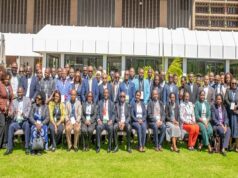





Namibia’s Minister of Agriculture, Fisheries, Water, and Land Reform, Inge Zaamwani, has tabled a landmark Land Bill in Parliament, signaling the most extensive change to the country’s land governance since independence. Described as a “transformative instrument,” the legislation aims to redress historical dispossession and promote equitable land access.
The 2025 Land Bill is set to replace 12 existing laws, including the 1995 Agricultural (Commercial) Land Reform Act, consolidating a fragmented system into a single, coherent framework.
Ending the Voluntary Approach
Crucially, the new Bill formally abandons the “willing-seller, willing-buyer” model, which has been deemed too slow and costly. Former president Hage Geingob had previously declared the approach a failure in addressing deep-seated land inequalities.
The new legislation explicitly embeds a state-led redistribution approach, designed to accelerate the transfer of land to historically disadvantaged, landless, or inadequately resourced Namibians, including the unemployed.
Expanded Powers of Expropriation
The Bill grants the Minister sweeping new powers to expropriate property at any time, provided it is in the public interest and just compensation is paid. This power can be exercised over farms offered for sale, properties illegally held by foreigners, absentee-owned land, under-utilized holdings, and those exceeding established economic thresholds.
Under Section 89, the Minister must issue a notice of intention to expropriate, allowing landowners 30 days to submit representations and negotiate. If no agreement is reached, the process can proceed, though the Land Reform Commission must consider the welfare of farmworkers and their families before a final decision.
New Compensation and Foreign Ownership Rules
The Bill introduces a structured compensation regime capped at the property’s open-market value plus proven financial losses. A solatium of up to N$50 000 will also be paid for inconvenience. Disputes over valuation will be referred to a centralized Lands Tribunal, which will see its membership expanded to seven experts for improved efficiency.
In a move to protect national assets, the Bill significantly strengthens restrictions on foreign ownership. Foreigners are now prohibited from acquiring either communal or commercial land and can only lease land under special conditions tied to job creation and economic benefit. Collusion with foreigners to circumvent the law carries heavy penalties, including fines up to N$50 000 or a 10-year prison term.
The legislation also provides for a Communal Land Development Fund to finance infrastructure in communal areas and introduces progressive land taxation based on valuation rolls compiled every five years, aiming to boost state revenue from commercial farmland.
Zaamwani urged lawmakers to deliberate in the spirit of nation-building, stating that the land is “the cradle of our dignity, the source of our sustenance and the foundation of our freedom.” The Bill now awaits a robust debate in the National Assembly.