

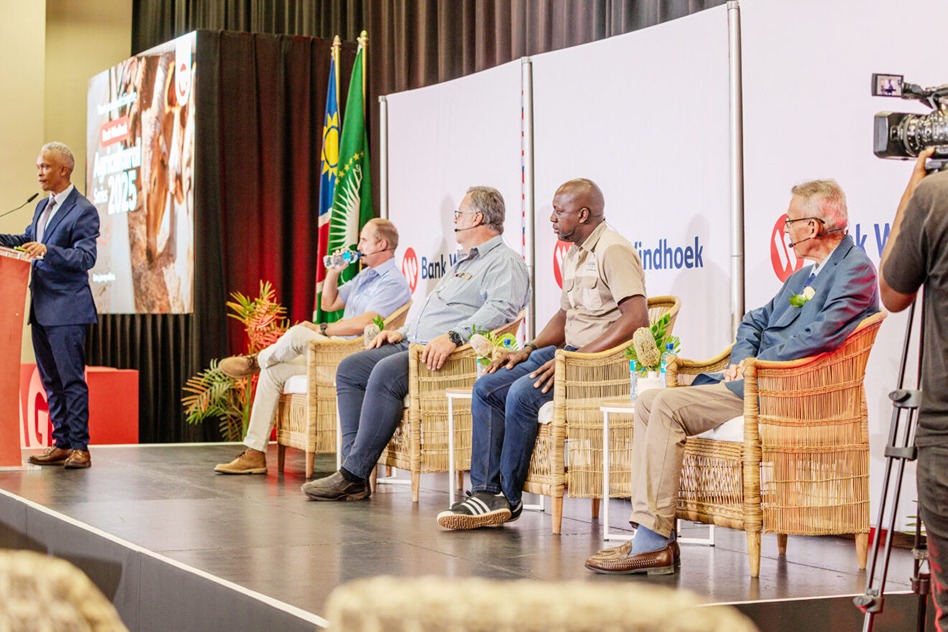
The Namibian government is prioritising genetic diversity to strengthen food security, boost productivity, and build resilience against climate change as the country accelerates agricultural transformation. Speaking at the Bank Windhoek Agricultural Series 2025, Minister of Agriculture, Fisheries, Water and Land Reform, Inge Zaamwani, said genetic diversity is essential for developing drought-tolerant crops, disease-resistant livestock and competitive agricultural products,key objectives aligned with Namibia’s Sixth National Development Plan (NDP6).
“Genetic diversity is not a luxury but a necessity,” noted Zaamwani, emphasising that investment in breeding, seed systems and improved livestock production is crucial to strengthening Namibia’s agri-food system. She highlighted several government initiatives supporting farmers including the Namibia Agricultural Mechanisation and Seed Improvement Project, the Conservation Agriculture Programme and the Livestock Support Programme, which provide access to certified seeds, mechanisation, climate-smart practices and improved market opportunities.
Zaamwani also stressed the importance of expanding irrigation infrastructure to reduce reliance on rain-fed agriculture, improve yields, and strengthen resilience. She called for stronger public-private partnerships to boost investment in research, farmer training and value chain development.“We must move from dialogue to delivery to ensure agriculture becomes a stronger driver of employment and economic growth,” urged Zaamwani.
The minister acknowledged that Namibia’s agricultural sector faces mounting pressures from climate variability and shifting market demands, underlining the need for collaboration with financial institutions, breeders, seed companies and research organisations. The government’s Strategy for the Transformation of the Agri-Food Sector identifies priority investment areas and will guide the agriculture chapter of the upcoming NDP6. The strategy aims to increase production capacity, stimulate private investment and advance Namibia’s pursuit of food sovereignty.