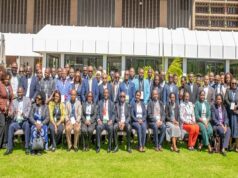




Namibia has taken a major step toward cementing its status as a leader in marine conservation, formally backing accession to the Agreement on the Conservation of Albatrosses and Petrels (ACAP) following a landmark international summit held in the coastal city of Swakopmund.
The decision, finalized during a Cabinet meeting on June 23, follows Namibia’s successful hosting of ACAP’s 15th Advisory Committee meeting earlier in the month. The move signals the southwest African nation’s intent to formally bind itself to the international treaty, aligning its lucrative commercial fishing sector with rigorous, science-based conservation standards.
The geopolitical and environmental stakes are high. Globally, nearly half of the world’s 350 seabird species are experiencing population declines, heavily pressured by industrial overfishing, shifting climates, and habitat degradation. Namibia’s entry into the pact is viewed by environmental economists as a significant boost to regional ocean stewardship, proving that aggressive conservation metrics can coexist with commercial fleet operations.
Namibia enters the international framework with substantial leverage, boasting drastic reductions in seabird mortality over the last two decades. Government data presented to international delegates revealed a 98% reduction in seabird bycatch within its demersal longline fishery, alongside a 95% drop in its demersal trawl fishery achievements driven by the rigorous implementation of its National Plan of Action for Seabirds.
The turnaround is the product of a multi-year coalition spanning state regulators, industrial trade groups, and international non-profits. The initiative has been steered by Namibia’s Ministry of Agriculture, Water, and Land Reform, alongside the Fisheries Observer Agency and the Namibian Hake Association. Technical and financial backing was provided by global heavyweights including BirdLife International and the Royal Society for the Protection of Birds (RSPB).
Locally, the Namibia Nature Foundation (NNF) has managed the ground-level transition since 2008 via the Albatross Task Force.
“This milestone is a powerful reminder that lasting conservation outcomes are not achieved overnight or in isolation,” the NNF said in a statement. “They require deep partnership, shared commitment, and sustained investment across government and industry lines.”
The broader ACAP summit in Swakopmund also advanced a series of global commercial fishing updates, endorsing stricter “Best Practice Advice” across pelagic, demersal, purse seine, and artisanal fisheries. Delegates refined indicators to track how effectively fleets respond to seabird bycatch and approved a new funding strategy targeting behavioral changes in mitigation uptake among ship crews.
The convergence of industrial strategy and environmental risk also drew significant capital commitments during the session. Australia announced a $2.5 million voluntary contribution to fund urgent research into how offshore renewable energy installations impact migratory seabirds.
The committee also adopted AviList as its new basal taxonomy framework and prioritized funding to analyze population trends feeding into the International Union for Conservation of Nature (IUCN) Red List. Emerging industrial threats ranging from high-pathogenicity avian influenza to marine plastics and per- and polyfluoroalkyl (PFAS) chemical pollutants topped the closing agenda.
With Chile slated to host the next committee cycle in Punta Arenas in 2027, Namibia’s impending accession positions the country as a blueprint for balancing high-yield fisheries with ecological preservation.