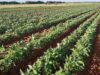

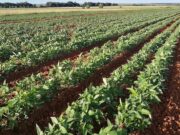


Namibia’s ambitious Green Schemes, designed over two decades to be the foundation of national food security, rural job creation, and agro-industrial growth, are facing an institutional collapse, according to a damning new parliamentary report. These eleven state-backed irrigation farms, strategically located along the Kavango and Zambezi rivers and representing one of Southern Africa’s most significant agricultural investments, are being crippled by chronic underinvestment, severe bureaucratic gridlock, and operational paralysis. The parliamentary standing committee on natural resources concluded that while the schemes remain essential to the nation, persistent and systemic failures, if unaddressed, pose an existential threat to the entire program, leaving thousands of hectares of fertile, irrigated land grossly underutilised.
The Kalimbeza rice project in Zambezi, once envisioned as the core of a national rice industry, offers a stark picture of dysfunction. Of its 229 hectares, only 150 remain viable due to neglected soil management, while broken machinery and non-functioning water distribution systems litter the site. Production has essentially ceased, exemplified by a 180-tonne raw rice harvest sitting unprocessed for months because the crucial processing machine remains broken, stalled by procurement delays centralised in Windhoek. Furthermore, the single storage facility is unfit for purpose, risking contamination and rendering future shipments unsellable, highlighting a severe structural problem compounded by the fact that $N$8 million of the $N$18 million (R18 million) 2024/25 budget was inexplicably allocated to a consultant, which the committee flagged as system-wide misalignment.
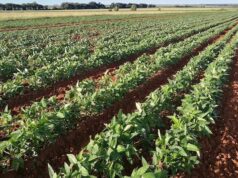
While the Shadikongoro Green Scheme in Kavango East continues to produce modest yields of maize (1,393 tonnes) and sunflower, its operation is severely hampered by outdated equipment, relying on just two tractors and borrowing a combine harvester from neighbours. A wheat milling plant installed in 2015 has never been commissioned, reflecting a capital expenditure failure. The human capital is also strained, with wages stagnant since 2017 and many workers remaining in “temporary” status for over five years. This operational fragility is linked directly to the protracted, unresolved dissolution of the former managing parastatal, AgriBusDev, which was formally shut down in 2021 but remains unintegrated into ministry structures four years later, creating an administrative void.
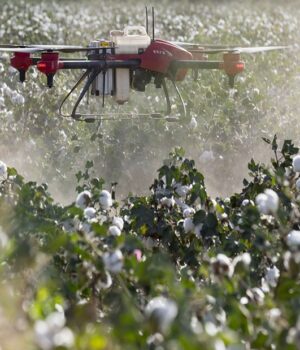
The Ndonga Linena scheme offers a rare yet highly instructive counterpoint to the systemic failure. Under effective management, it has successfully adopted precision farming technologies, including soil sensors, automated irrigation systems, and digital crop monitoring, driving increased efficiency and profitability. In 2025, commercial blocks yielded 1,900 tonnes of maize (valued at $N$17.94 million) and 660 tonnes of winter wheat ($N$5.61 million), with projections to exceed $N$47 million in revenue for 2025/26. However, even this model scheme is hindered by the system, as small-scale farmers face exorbitant monthly electricity bills exceeding $N$1 million, crippling input costs, and a lack of clear pathways for growth, alongside endemic issues like delayed planting and exclusion from key decisions.
The Uvhungu-Vhungu scheme, despite recent investments in modern machinery, is buckling under severe financial vulnerability. The project is reportedly owed $N$2.5 million in outstanding VAT refunds from the Namibia Revenue Agency, a debt that has been pending for four years, severely impacting its ability to maintain equipment. Small-scale farmers have gone unpaid for produce delivered eight months ago. The farm’s operational inefficiency is further compounded by the lack of a proper storage facility, forcing the expensive and inefficient practice of loading maize directly onto trucks at harvest. This financial and logistical chaos is ultimately rooted in the catastrophic centralisation of authority in Windhoek following AgriBusDev’s collapse. Routine operational decisions, such as a tractor tyre replacement or pump servicing, now require weeks of bureaucratic approval from the capital, a blockage the committee concludes is fundamentally undermining productivity and risks killing the entire scheme.
The failure of the eleven schemes to operate at full capacity directly entrenches Namibia’s structural dependency on South Africa for food supply. The country imports roughly two-thirds of all cereals consumed, and in 2024 alone imported US$57.98 million worth of vegetable, fruit, and nut preparations from its neighbour. Regional governors delivered a damning assessment, with Kavango East warning that poor management is limiting the region’s capacity to produce maize and wheat at scale despite having the resources. The parliamentary committee’s ultimate finding is that the system, not the farmers, is failing, and until the bureaucratic and financial paralysis is reversed, South Africa will continue to dictate the availability and price of staple foods, compromising Namibia’s economic sovereignty and food security.
The committee’s report issues an urgent call for a complete turnaround strategy, encompassing root-cause analysis, financial restructuring, investment in modern machinery, and, crucially, decentralised procurement and management. Governors, like Zambezi’s Dorothy Kabula, stress that land and infrastructure are being “left idle” while unemployment soars. The success of Ndonga Linena demonstrates that the agricultural potential is enormous, but the question remains whether the political will in Windhoek will finally align with the country’s vast agricultural capacity to fix the broken system.