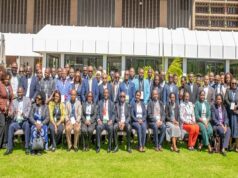




At a panel discussion hosted by Corteva Agriscience in partnership with CNBC Africa in Johannesburg, industry leaders converged on a central theme: Africa’s agricultural future will not be secured through short-term fixes but through sustained technological transformation supported by coherent policy and investment. The discussion brought together stakeholders from across the agricultural value chain to examine how innovation in seeds, digital tools and farming systems is reshaping food production and long-term resilience across the continent.
AGBIZ Senior Economist Wandile Sihlobo said Africa has the potential to become a global agricultural powerhouse, but only if technology deployment, enabling policies and private investment are aligned in a coordinated, long-term strategy. He cautioned that the continent’s vulnerability to climate shocks and economic instability makes structural reform more critical than reactive interventions, adding that advances in digital agriculture, genetics and farmer-centric solutions must underpin productivity gains across diverse African markets.
Corteva Agriscience Commercial Lead for Africa and the Middle East Abraham Vermeulen said the company’s focus extends beyond product development to creating technologies anchored in farmers’ real needs including resilience to climate stress, reliability in performance and improved returns on investment. He stressed that meaningful impact can only be achieved when private sector research efforts operate alongside supportive regulatory environments and consistent policy frameworks, allowing innovation to be scaled across regions and farming systems.
The panel further agreed that Africa’s long-term agricultural resilience depends on strengthening home-grown scientific and research capacity. While global technologies remain important, speakers emphasised the need for African countries to build their own breeding, research and innovation systems that are tailored to local conditions, climatic realities and socio-economic contexts. Technology adoption, they noted, cannot be treated as a purely technical process, since it also requires political commitment, education investment and long-term planning to ensure that new tools translate into broad-based impact.
Managing Director of the Bureau for Food and Agricultural Policy, Ferdie Meyer highlighted South Africa as an example of how alignment between technology and infrastructure can drive growth. He said the agricultural sector has shown notable resilience and dynamism over recent years, with improved yields and expanded cultivation demonstrating its capacity to outperform broader economic trends when the right support systems are in place. However, he added that regional integration initiatives such as the African Continental Free Trade Area will only succeed if practical challenges around logistics, border processes and market access are addressed. He stressed that responsive regulation, technological adoption and infrastructure development must advance together if African agriculture is to deliver both food security and export competitiveness.
Commercial farmer and Nkanyezi Group Chief Executive Lebohang Dhludhlu spoke about the role of technology in opening opportunities for young people and women in agriculture. She said access to funding and structured support had enabled her own journey and demonstrated that agriculture can offer sustainable livelihoods. She emphasised that data-driven tools, such as seasonal forecasts, crop performance metrics and market information, are helping farmers make more informed decisions about planting and investment. However, she warned that training and support remain uneven and must be expanded to ensure emerging farmers can fully benefit from available technologies, particularly as the sector seeks more inclusive growth.
The panel concluded that Africa’s vast agricultural potential can only be unlocked through the deeper integration of advanced technologies such as gene editing, improved seed genetics and sustainable production systems. These innovations, participants said, are essential for building climate resilience, increasing productivity and creating long-term economic opportunities across rural communities. Vermeulen reiterated Corteva’s commitment to long-term investment on the continent, working with farmers, research institutions and governments to ensure that technology is not only accessible but practical and impactful, supporting food security, export growth and inclusive agricultural development.