


In a pioneering move for sustainable aquaculture, Kelp Blue, a company at the forefront of marine restoration, has successfully harvested over 200 tonnes of kelp this year from its expansive offshore site near Lüderitz. This significant harvest marks a pivotal moment for the company, which holds a 15-year commercial license to cultivate giant kelp (Macrocystis pyrifera) across a vast 6,400 hectares.
The venture goes beyond mere harvesting; it’s a testament to a unique approach to environmental stewardship. Daniel Hooft, founder and CEO of Kelp Blue, emphasizes the company’s commitment to long-term sustainability through a meticulous harvest method. “We trim only the canopy of our underwater forests to ensure healthy regrowth, capture carbon, and boost marine biodiversity,” Hooft explains, highlighting a strategy designed to preserve the integrity of these vital marine ecosystems.
The ecological benefits of these cultivated kelp forests are already proving remarkable. Hooft notes an “incredibly quick” transformation, with observations of “three- to fourfold biodiversity increases in our farms within five months of planting.” This rapid revitalization underscores the potent regenerative power of kelp.
These underwater havens are quickly becoming crucial nurseries for fish, with seasonal surges in hake and sardine eDNA indicating their function as natural hatcheries. “This increases an individual fish egg’s chance of survival by one hundred times,” Hooft reveals, pointing to a dramatic improvement in fish recruitment and the return of various marine species in greater numbers.
The thriving kelp forests have even attracted larger marine inhabitants. “We see mola mola cruising our forests to hoover up jellyfish,” says Hooft, painting a vivid picture of a revitalized ecosystem. Dolphins, too, are benefiting, finding both new hunting grounds and “shelter against the occasional squad of dolphin-killer orcas.” Even sharks are experiencing a boost, with “Mermaids’ purse counts up drastically,” demonstrating the kelp’s role in providing crucial attachment points for shark egg sacs.
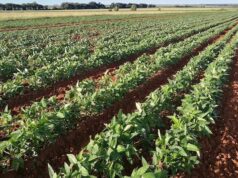
Beyond their ecological impact, the harvested kelp serves a practical purpose. It is processed into Stimblue+, a potent biostimulant designed to support regenerative agriculture. “At Kelp Blue, we convert the biomass into Stimblue+,” Hooft explains, “a kelp extract that boosts farmers’ crop yields and quality while improving soil health.” This innovative product offers a sustainable solution for enhancing food production.
Kelp Blue’s commitment extends to broader conservation efforts through the Kelp Forest Foundation. This initiative focuses on quantifying essential ecosystem services such as carbon sequestration, biodiversity enhancement, and job creation, all while actively working towards the conservation and restoration of kelp forests globally. The company also fosters marine education through the Lüderitz Blue School, aiming to cultivate “a new generation” passionate about ocean stewardship.
Kelp Blue’s operations represent a compelling model for how commercial ventures can actively contribute to environmental restoration and sustainable resource management, offering a beacon of hope for both marine ecosystems and agricultural practices.